Process Safety — preventing the "Big Bangs," not just responding to them.
These incidents happen rarely — but when they do, the damage runs into billions of dollars and can put a company out of business. VIRSAT's Process Safety training is built directly on the IOGP Process Safety Fundamentals, the industry standard for preventing them.
Process safety training covers the ten IOGP Process Safety Fundamentals — rare, catastrophic incidents that happen infrequently but can cost billions and threaten a company's survival. Two of its core disciplines, Energy Isolation and De-Isolation & Re-Energizing, are also live HeadSafe field checks, tied to PSF1, Maintain Safe Isolation.
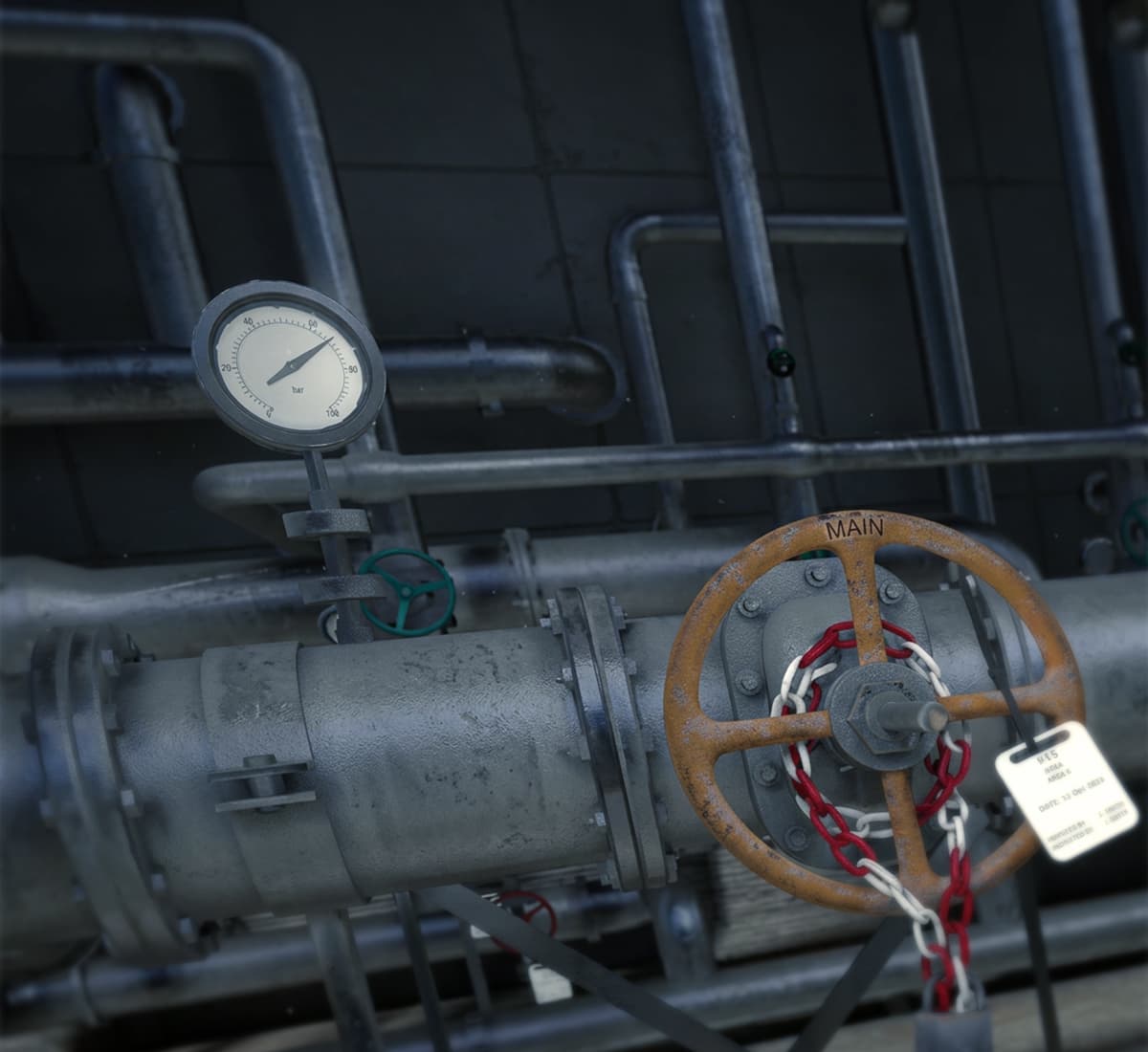
Rare doesn't mean survivable
Process safety incidents are different from the day-to-day fatal risks covered by the Life-Saving Rules — they happen very rarely, but cause damage measured in billions of dollars and can be severe enough to threaten a company's survival. The IOGP Process Safety Fundamentals exist specifically to train operators to prevent them before they happen.
A dedicated VR module — and a real field check, via two shared modules.
Process Safety doesn't have its own standalone HeadSafe topic, but two of its core disciplines — energy isolation and de-isolation/re-energizing — are already live HeadSafe checks, since they're the same procedures that sit at the heart of preventing a catastrophic incident.
Process Safety™
A VR serious game built around the ten IOGP Process Safety Fundamentals (PSF1–PSF10) — from maintaining safe isolation to managing ignition sources. Trainees select the module relevant to their role, work through it, and receive a score.
- —Structured flow: welcome & company branding → safety instruction → module selection → score
- —Ten PSF modules, selectable individually
- —Delivered in VR
HeadSafe — Energy Isolation & De-Isolation
The field verification side of process safety runs through two of HeadSafe's live inspection topics: Energy Isolation, and De-Isolation & Re-Energizing — the procedures directly behind PSF1, Maintain Safe Isolation.
- —Energy Isolation — verified before work starts
- —De-Isolation & Re-Energizing — verified before bringing equipment back online
- —Same hands-free, voice-controlled HeadSafe experience as every other topic
Energy Isolation
De-Isolation & Re-Energizing
PSF1 — Maintain Safe Isolation
One of the ten modules, shown here as an example of how the training actually works.
Introduction in Safe Isolation
Sets up the scenario and the isolation concepts the trainee will apply.
Preparations in the control room
Trainees answer P&ID-based questions, right or wrong, with hints available and a reflection on the correct answer.
Implement the isolation in the field
Three field scenes carry the same question-and-reflection structure through to physically implementing the isolation.
Classroom or e-learning vs. VIRSAT's VR module
The gap is largest on procedures with a strict, ordered sequence — exactly what this topic is.
| Question a buyer asks | Classroom / e-learning | VIRSAT VR module |
|---|---|---|
| Does the worker perform the isolation sequence, or just watch it? | Watches | Performs |
| Are sequence errors caught during training? | Rarely | Every time |
| Does it link to real-world field verification? | No | Yes — Energy Isolation, De-Isolation & Re-Energizing |
| Can it run without a VR headset? | N/A | Yes — PC/desktop available |
What this is — and isn't
Is there a HeadSafe check for process safety?
Not a dedicated "Process Safety" HeadSafe topic — but two of its core disciplines are covered by live HeadSafe checks: Energy Isolation, and De-Isolation & Re-Energizing. These are the same procedures behind PSF1, Maintain Safe Isolation, so the field verification exists even though it isn't badged as a standalone process-safety product.
Do we need all ten PSF modules, or can we select specific ones?
The training is modular — trainees select the PSF module relevant to their role rather than working through all ten every time.
How is this different from the Life-Saving Rules training?
The Life-Saving Rules address everyday fatal risks — confined space entry, working at height, and similar. Process Safety addresses rare, catastrophic, plant-level incidents. Most operators need both.