One evidence base. Four industries.
The Life-Saving Rules methodology and the safety data behind it span oil & gas, construction, and manufacturing — the fatal-risk categories are largely the same wherever the work is high-consequence. Road logistics carries its own dedicated case data.
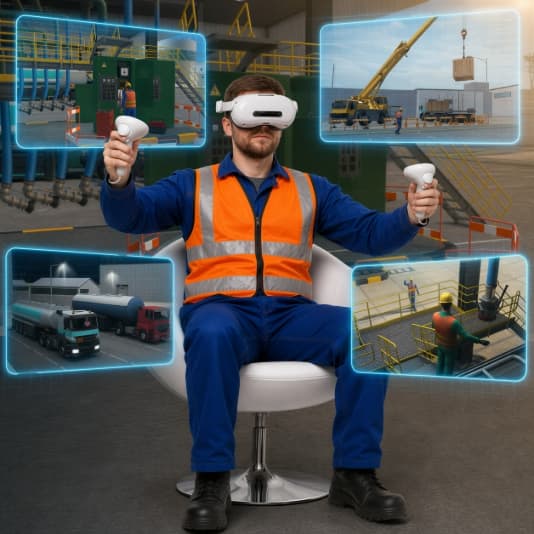
Oil & Gas
The IOGP Life-Saving Rules were initiated and established by one of VIRSAT's own founders. This isn't a vendor that adapted someone else's standard for oil & gas — it's built by people who helped write the standard the industry now runs on.
Construction
Working at height, standing in the line of fire, lifting and hoisting — the fatal-risk categories on a construction site are largely the same ones the IOGP Life-Saving Rules were built to address, whether the plant being built processes oil and gas or anything else.
Manufacturing
Energy isolation, live electrical work, and safely bringing equipment back online after maintenance define the fatal-risk pattern in plant operations. It's the same discipline behind the Life-Saving Rules — and the same discipline HeadSafe checks in the field.
Road Logistics
Driving kills more oil & gas workers than fires, explosions, and falls combined — and for a logistics fleet, driving isn't one risk among many, it's the whole job. VIRSAT trains the judgment that has to hold up off-site, unsupervised.
VIRSAT Implementation Support
Buying VR training is the easy part. Getting a 1,000-person organization to actually adopt it — with leadership on board, procedures aligned, and a support system in place — is the part most vendors leave you to figure out alone. VIRSAT doesn't.