Mechanical Lifting — learn the risk, then check the work.
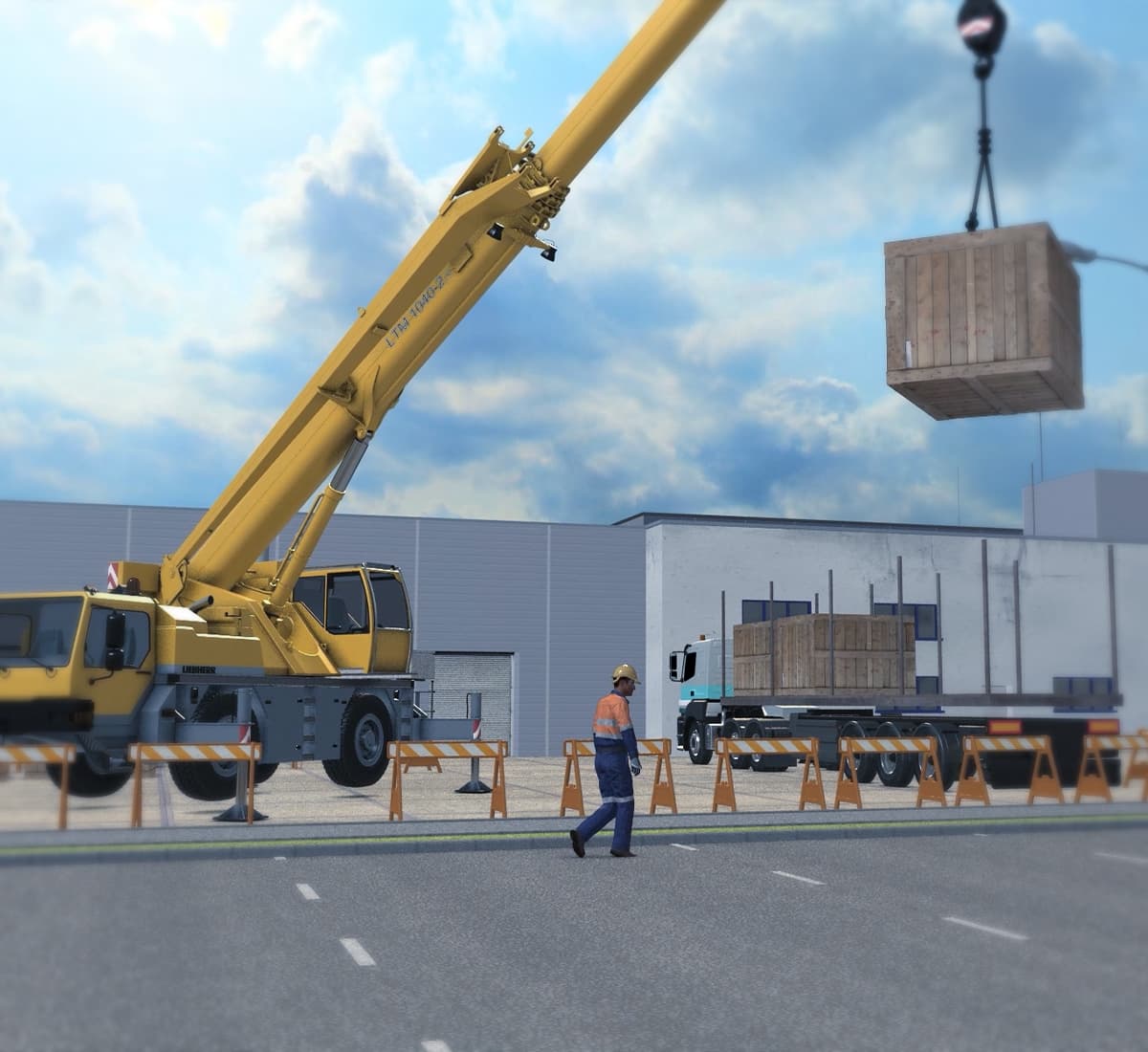
A dropped load or a worker caught in the swing radius of a crane are among the most consistently fatal patterns in industrial work. VIRSAT trains workers to recognize an unsafe lift, and gives supervisors a way to verify the lift plan was actually followed.
Mechanical lifting training covers recognizing an unsafe lift — load, rigging, swing radius — before a crane operation starts. HeadSafe then verifies the lift plan in the field, hands-free, so a dropped load or a worker caught in the swing radius is prevented before it happens, not investigated after.
The pattern behind the incidents
Safe Mechanical Lifting is one of the nine IOGP Life-Saving Rules, introduced after a large-scale review of historic fatal incidents across oil & gas, construction, and manufacturing. Being struck by a dropped object or caught between moving equipment are recurring causes of fatal incidents industry-wide — exactly what this rule targets.
Learn it once. Check it every time.
Mechanical Lifting gets the full two-phase treatment — a training module that builds recognition and judgment, and a HeadSafe check that verifies the entry procedure in the field.
Covered in the basic workplace HSE training
Mechanical lifting isn't taught as a standalone course — a lifting operation often happens alongside work at height or near mobile equipment on the same site. So VIRSAT's basic training covers all nine fatal-risk topics together, mechanical lifting included, in one module.
- —Awareness level: a fast, gamified format for broad workforce reach
- —Professional level: a full virtual reality operational environment
- —Builds hazard recognition and intervention skill, not quiz recall
- —Audio-led — no reading required, runs in any supported language
Mechanical Lifting — HeadSafe verification
A hands-free AR checklist for the lift plan itself, built on an industry standard start-work checklist — used by whoever is preparing the permit, starting the work, or auditing it in the field.
- —Same hazard categories as the training, with field-level granularity
- —Voice-controlled — no gloves off, no paperwork
- —Results log automatically against the permit record
Explanatory animations
Contextual help
AI assistant on your manuals
Live expert support
Classroom or e-learning vs. VIRSAT's VR module
The gap is largest on procedures with a strict, ordered sequence — exactly what this topic is.
| Question a buyer asks | Classroom / e-learning | VIRSAT VR module |
|---|---|---|
| Does the worker perform the lift sequence, or just watch it? | Watches | Performs |
| Are sequence errors caught during training? | Rarely | Every time |
| Does it link to real-world field verification? | No | Yes — Mechanical Lifting |
| Can it run without a VR headset? | N/A | Yes — PC/desktop available |
What this is — and isn't
Does this replace hands-on physical training for this topic?
No. VIRSAT trains hazard recognition, pre-work checking, and intervention — it doesn't simulate hands-on physical tasks or rescue drills. If your program requires physical, hands-on training, this sits alongside it, not instead of it.
Do we need the training and HeadSafe, or can we buy just one?
Either. Most customers run both as a single package, but the training module and the HeadSafe check for this topic are also available separately if that's all you need.
We don't formally use the IOGP Life-Saving Rules — does this still apply?
Yes. The same content is available framed as general workplace HSE training rather than under the Life-Saving Rules name, for organizations that haven't adopted that framework.
What hardware does HeadSafe run on?
Primarily the RealWear Arc 3 — explosion-proof and IP54-rated, built for hazardous-area work. Specifications for other headset brands are available on request.